

What Does Hearing God’s Voice Mean?
One of the most common questions I hear from believers is, “How do I hear God’s voice?”
It is a beautiful question. It reveals a heart that longs for more of the Lord. And that longing is a gift from God Himself.
But before we explore the “how,” we need to understand the “what.”
What does it actually mean to hear God’s voice?
In the Bible, God is a communicator.
He spoke the worlds into existence. He spoke to Adam and Eve in the cool of the day. He spoke to Moses through a bush that burned with fire. He spoke to Elijah in a still, small whisper.
And He continues to speak to His children today.
Jesus made it plain:
“My sheep hear My voice, and I know them, and they follow Me” (John 10:27).
Notice what Jesus said. He did not say, “My pastors hear My voice.”
He did not say, “My prophets hear My voice.”
He said, “My sheep.” That includes you.
So, if you are a born-again believer, you already have the capacity to hear God speak.
The Holy Spirit lives inside you. He communicates by His Spirit to your personal human spirit.
This is an intimate, internal conversation between Creator and child.

Why Does This Matter for Spiritual Growth?
I spent years as a Christian before I understood what it meant to recognize God’s voice.
I read my Bible. I prayed. I went to church.
And yet, my spiritual life felt dry at times. I knew about God, but I struggled to know Him in a deeply intimate way, or in the way David or Paul described.
The turning point came when I began to understand that God wanted to have ongoing interactions with me.
I realized He, my Creator Father, wanted to speak to me.
He wanted a two-way conversation.
This truth transformed my walk.
When I learned to recognize His voice, prayer became personal. Scripture came alive. Worship became an encounter.
My entire relationship with God shifted from head knowledge to heart experience.
If you feel like something is missing in your spiritual life, it may be that you have not yet learned to tune your ear to the sound of your Father’s voice.
And friend, that is exactly what He wants to teach you.
Common Misconceptions About Hearing God’s Voice
There are many beliefs floating around about how God speaks.
Some of them are helpful.
Some of them actually keep people from recognizing His voice when He does speak. Let me address a few of the most common ones.
Misconception #1: God Only Speaks Through an Audible Voice
Many people assume that if God were to speak to them, they would hear a loud, audible voice from heaven.
They picture a big booming voice, or older movie goers remember Charton Heston from “The Ten Commandments.” Many people picture a dramatic moment like Saul on the road to Damascus, where God’s voice thundered and Saul fell to the ground (Acts 9).
Yes, God can speak audibly.
He has done it before, and He can do it again.
There have been a couple of times in my life where I heard God speak so loudly, I thought everyone around me could hear. But those moments are rare.
Most often, God speaks in a far more gentle way.
Elijah learned this at Mount Horeb.
In Elijah’s lesson, God did not speak that time in the great wind that tore apart the mountains. He was not in the earthquake. He was not in the fire. God’s voice came in a gentle whisper, in a still small breeze (1 Kings 19:11-12).
If you are waiting for a booming voice from the sky, you may miss the quiet whisper He has been speaking all along.
Misconception #2: Hearing God Is Only for “Special” People
I believed this for a long time.
I thought God only spoke directly to pastors, prophets, and those with special gifts.
But Scripture paints a very different picture.
Jesus did not say, “A select few of My sheep hear My voice.” Every born-again believer has the Holy Spirit within them.
And the Holy Spirit is the One who communicates God’s thoughts, love, and direction to your personal spirit.
“However, when He, the Spirit of truth, has come, He will guide you into all truth” (John 16:13 NKJV).
You do not need a seminary degree or a title. You need a willing heart and a teachable spirit.

Misconception #3: If It Sounds Like My Own Thoughts, It Cannot Be God
This is one of the biggest stumbling blocks I have seen in people who want to hear God more clearly.
God’s voice often comes as spontaneous thoughts that flow into your mind.
They may sound a lot like your own thoughts, because God communicates through your personal style and vocabulary.
Just as each Gospel writer’s personality came through in their writing, God’s words to you will come through your own unique personality.
The difference?
- God’s thoughts will be wiser, more loving, and more concerned about your heart’s motive than your own thoughts.
- They will carry faith, peace, love, joy, and/or conviction.
- They will never contradict Scripture.
- And they will often surprise you with insight you did not generate on your own.
I remember the first time I recognized God’s flowing thoughts to me.
I had asked God some questions. Then a thought came to my mind that was so tender, so full of compassion, I knew it did not come from me.
It carried a love my soul could not manufacture. That was the beginning of a whole new dimension of my relationship with the Lord.
How to Discern God’s Voice
If God’s voice can come as subtle thoughts in our mind, how do we discern what is from God, what is from our own soul, and what may be from the enemy?
This is one of the most practical and important skills you can develop as a believer.
Here are some Biblical keys that have helped me and countless others grow in discernment.
1. God’s Thoughts Come Spontaneously
Your own thoughts follow a logical pattern. One idea connects to the next, then the next.
God’s thoughts, by contrast, drop into your mind without a logical lead-up. They arrive as gentle, unprompted ideas, impressions, or words.
You may be going about your day and suddenly a thought lands in your heart that you were not thinking about at all.
*For example, one day I looked at the clock and saw it was noon.
I thought, “Oh I am hungry; what is there to eat; there are some cookies on the counter; no I should eat lunch not cookies; but what can I have; maybe there is some lunch meat; no we ate all the lunch meat; maybe peanut butter; do we have chips left; fruit?”
Do you see? My human thoughts followed a pattern of moving logically from one thing to the next.
When you begin to hear God’s voice to you, you may look at the clock and see it is noon, and think, “Oh I am hungry.”
Then God will drop a thought into your mind like, “I will take care of all your needs, just as I said I would.”
God’s thoughts flow peacefully and easily to you in the first person with “I” statements.
Then you will feel His love and care and probably tear up. (Which is exactly what happened to me.)
So, what this means is you must be open to little interruptions in your regular thought flow to begin to recognize spontaneous flowing thoughts that come to you.
Jesus Himself lived from this inner flow. He said,
“The Son can do nothing of Himself, unless it is something He sees the Father doing” (John 5:19).
Jesus received spontaneous impressions and pictures from His Father. We are called to the same kind of receptivity.
2. God’s Voice Carries Peace and Love
God’s presence is always peace, love, and joy. Never anxiety, fear, or condemnation.
The Bible promises that our Creator Father sent us the “Comforter” (John 14:16 KJV).
So, His words to you will carry the nature of comfort, encouragement, edification, and love.
If the thought that comes to mind produces dread, shame, pressure, fear, or panic, that is not God’s voice.
3. God’s Words Never Contradict Scripture
This is a non-negotiable anchor for discernment. Every impression, every thought, every word you believe may be from God must be tested against His written Word.
“All Scripture is inspired by God and profitable for teaching, for reproof, for correction, for training in righteousness” (2 Timothy 3:16).
The Holy Spirit will never lead you in a direction that contradicts the Bible.
He inspired the Scriptures, and He will always confirm and illuminate them.
If a thought or impression pulls you away from Biblical truth, reject it.

4. God’s Voice Will Produce Good Fruit
Jesus taught us that we know a tree by its fruit.
The same principle applies to discerning God’s voice. When you embrace a word from God, it will produce excitement, conviction, faith, awe, wonder, joy, love, and peace.
There will be grace and strength to carry out His words.
“But the fruit of the Spirit is love, joy, peace, patience, kindness, goodness, faithfulness, gentleness, self-control” (Galatians 5:22-23).
By contrast, the enemy’s voice barrages your mind with pressure, comparison, negativity, doubt, and fear.
His thoughts appeal to your fleshly desires. They may contain a sliver of truth twisted to imply something entirely different. They cause stress and confusion.
5. Seek Confirmation Through Trusted Believers
You were not designed to walk this journey alone. Proverbs 11:14 reminds us,
“Where there is no guidance the people fall, but in abundance of counselors there is victory.”
When you believe you have heard from God, especially about significant decisions, share what you have received with a mature and trusted believer, or pastor.
God often uses the body of Christ to confirm, clarify, and bring additional perspective.
A wise counselor can help you sort through what you have heard and encourage you on the path God is leading.
6. Practice Stillness and Quiet
God’s voice is easily drowned out by the noise of our lives. We live in an age of constant stimulation. Our minds race from one task to the next. We scroll, multitask, and fill every silence.
Psalm 46:10 commands us to “be still and know that I am God.”
The Hebrew word translated “be still” means to stop, let go, and relax. It is an invitation to cease our striving and position ourselves to hear.
In my own journey, I found that I could hear God most clearly when I learned to quiet my soul.
I would sit with a verse of Scripture, read it slowly, and wait for His presence to settle over my heart. In those moments of intentional stillness, His gentle whisper became loud and clear.
Encouraging Experiences of Hearing God’s Voice
Sometimes the best way to grow in faith is to hear how others have walked the same path. Their stories give us language for our own experiences and courage to keep seeking. Below are a few examples that may encourage you.
Brother Lawrence: Ongoing Conversations with God
In the Christian classic Practicing His Presence, Brother Lawrence, a humble cook in a monastery, came to form the habit of continuous conversation with God. His times of prayer were no different from his times of work. He talked to God while he washed dishes, kneaded bread, and went about his daily tasks. He discovered that the practice of turning his mind toward God throughout the day produced a sustained awareness of God’s presence and voice.
Lawrence’s testimony reminds us that you do not need a quiet room or a perfect setting to hear God. You can learn to recognize His voice in the middle of your daily routine.
A.B. Simpson: Learning to Hear in the Quiet
A.B. Simpson wrote about his early struggle to quiet his mind and hear God’s voice. When he first tried to be still, a thousand voices flooded his ears. His own questions, his prayers, the suggestions of the enemy, and the turmoil of the world all clamored for attention.
But as Simpson persisted and slowly learned to obey the command to “be still,” he described a remarkable shift. A still, small voice began to speak in the depths of his being with tenderness, power, and comfort. That voice became his prayer, his wisdom, his strength. He discovered that God’s voice was already there. He simply needed to learn to listen.
A Song from the Holy Spirit
When I was the director of a faith-based rehabilitation center, a teacher arrived one day frazzled and late for class. To give her a moment to collect herself, I began the class with a song that “came” to my mind. I had not planned it. The song simply rose up in my spirit.
After class, the teacher told me that specific song had comforted her throughout her entire life. As a child, she had posted the words on her bedroom wall. The Holy Spirit knew what she needed in that moment and used a song to speak love and reassurance through me to her.
These encounters are not rare or reserved for the elite. They are the normal Christian life as God designed it. He longs to speak to you in ways that are deeply personal and meaningful.
You Can Learn to Hear God’s Voice
Friend, if you have been longing to hear God speak, take heart. He has been speaking all along. He is the Good Shepherd, and you are His sheep.
He communicates by His Holy Spirit to your personal spirit in ways that are intimate, gentle, and full of love.
You can learn to recognize His voice.
It takes intentional practice, a humble and curious heart, and a willingness to be still. But I promise you, the pursuit is worth every moment.
Because on the other side of your seeking, you will find Him. And He will be more wonderful than you imagined.
“Call to Me and I will answer you, and I will tell you great and mighty things, which you do not know” (Jeremiah 33:3).
I pray that your ears are opened today to hear your Father’s voice in new and beautiful ways. I pray His peace wraps around you as you learn to listen. And I pray you discover the joy of a life lived in ongoing conversation with your Creator God.
Discover More:
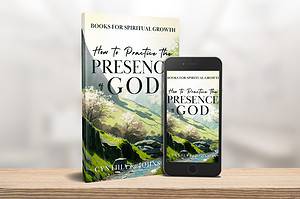
Want to go deeper? My book, How to Practice the Presence of God, includes step-by-step exercises to help you hear God’s voice and experience His presence in your daily life. You can find it on Amazon.
Related Articles:
Hear God’s Voice More Clearly: What Does God’s Voice Sound Like?


